Journal of
Environmental Treatment Techniques, Volume 4, Issue 2, Pages 41-45,
Download
PDF format
Microbial Characterization of Maize Fermentation Water
during Ogi Production
Lovet T. Kigigha, Sylvester Chibueze Izah*, Ifeoma Peace Okowa
Department of Biological Sciences, Faculty of Science, Niger Delta
University, Wilberforce Island, Bayelsa state, Nigeria
Received:
07/06/2015 Accepted:
18/06/2016 Published:
30/09/2016
Abstract
This study
characterized the microorganism found in 0 – 96 hours maize fermentation medium
during ogi production (a cereal based porridge). Dried yellow maize were
purchased from three maize sellers at Rumuomasi market, Port Harcourt, Nigeria.
The samples were fermented using sterile water for 0 – 96 hours. About 2ml of
the fermentation water was aseptically collected. Standard microbiological
characterization of the isolates was carried out. Results revealed that Saccharomyces cerevisiae, Corynebacteria and
Lactobacillus species were the main
microbes found in the fermentation medium within 96 hours of fermentation. Other
microbes found in the medium included Staphylococcus aureus, Escherichia coli, Enterobacter, Pseudomonas, Bacillus, Micrococcus species (bacteria), Aspergillus
flavus, Aspergillus niger, Penicillium, Rhizopus, Mucor, Fusarium,
Geotrichum species
(Fungi). There was decline in the TCFU ml-1 followed by increasing
pH as the fermentation progressed. This would suggest that the fermentation
medium gradually became unfavorable to the microbial population. The
implication of the effect of pH variability with the preponderance of the
isolates over the period of fermentation was discussed.
Keywords: Cereal, Fermentation, Maize, Microorganisms, Ogi
1 Introduction[1]
Like rice
and wheat, maize is an important cereal used globally for the production of
several products. Typically, maize belongs to the Poceace family; maize thrives in both tropical and temperate
regions of the world. Maize is an annual plant that produces grains that are
edible and as such have economic importance. Maize is produced in several
countries of the world notably, United States, China, Brazil, Mexico, India,
Argentina, Spain, Italy, Nigeria Australia etc.
Maize is
used for the production of several foods including fermented foods.
Abdulrahaman and Kolawole [1] listed 28 different food dishes that could be
produced from maize. Among the notable uses of maize is Ogi production (a fermented maize slurry), which is used especially
as weaning food for infants [2-5] as
well as a dietary staple for adults in West Africa especially for the
elderly and sick. Maize is also used for the production of Masa (a
sorghum-maize blend) [6]; Kokoro (a Nigerian indigenous fermented
maize snack) [7]; sekete (a fermented
maize beverage) [8]. In addition, Agidi can also be produced from
fermented maize slurry. Like ogi,
Agidi is an essential traditional cereal based food consumed in Africa that is
processed by natural fermentation [9, 10] of cereal mainly maize. Like Ogi,
Agidi is also consumed with soup, stew, akara, moimoi as light meal for the
sick [11, 12].
Maize
typically has health benefits. For instance, Abdulrahaman and Kolawole [1]
reported that maize has 6 medicinal values. Some of the major health benefits
of maize include as a rich source of vitamins and minerals; controls of
diabetes and hypertension; reduction in cholesterol absorption in the body and
risk of various cardiovascular diseases; anemia prevention; boosting of immune
system; maintenance of vision and healthy skin; lowering risk of colon cancer
and hemorrhoids and enhancement of bone strength [13]. Similarly, maize is rich in nutrients (i.e. dietary fiber,
carbohydrate, calories and low in protein), minerals (magnesium, phosphorus,
potassium and manganese) and vitamins (thiamin, vitamin C, folate and niacin)
[13]. However, during processing of
maize for ogi production, notably during sieving of milled fermented maize some
nutrients are lost. For instance Farinde [14] reported reduction in protein, ash,
fiber, carbohydrate, iron, zinc, magnesium, sodium and calcium content in
sieved ogi than in the un-sieved type.
During fermentation of maize for ogi production water is typically used
to ferment sieved maize. Authors have variously reported that initial
fermentation period of 1 – 3 days is ideal [3, 14-20]. On appearance, the maize gets swollen and the water
becomes turbid. On microbial presence, authors have variously reported that
microbial consortia of maize fermentation medium increases with density [2, 15,
18, 21, 22] and reduces in diversity as
fermentation progresses. Similarly, authors have reported that most of the
microbial diversity that participate in fermentation is mainly of the genera Lactobacillus,
Leuconostoc, Saccharomyces. Oyewole and Isah [23] listed genera of microbes
that play essential role in fermentation of traditional food to include Lactobacillus,
Lactococcus, Leuconostoc, Enterococcus, Streptococcus, Penicillium and Saccharomyces.
In a recent review by Izah
et al. [12], the authors reported that Saccharomyces cerevisiae,
Lactobacillus species and Aspergillus niger were the predominant
microbial isolates found in maize ogi fermentation medium.
Several studies have been
carried out with regards to microbial diversity of maize fermentation water
[15, 18, 21, 22, 24, 25]. Therefore,
this study focuses on the microbial characterization of four days maize
fermentation medium in Port Harcourt Metropolis.
2 Materials and Methods
2.1 Field Sampling
Dried yellow maize samples were purchased
from three maize sellers at Rumuomasi market, Port Harcourt, Nigeria. They were
packaged in sterile Ziploc bags and taken to the laboratory for fermentation.
2.2 Sample
preparation
In a sterile 1000 ml conical flask, the
maize samples were separately soaked using 950ml sterile water which was
aseptically added. The control was set
up (using sterile water without maize added). The cap of the conical flask was
loosely covered. 2ml of the ferment water samples from both media viz. the
flask containing maize and the one containing only sterile water was collected
after shaking for microbiological examination.
2.3 Identification of microbial isolates
Four media i.e. Nutrient agar (for total heterotrophic
bacteria counts), MacConkey Agar (for the enumeration of Enterobacteriaceae
family), Potato dextrose agar (for mould and Yeast), DeMan, Rogosa and Sharpe
Agar i.e. MRS Agar (for Lactobacillus). The media were prepared according to
the manufacturer’s instruction. The Pour plate method was used for TCFU m-1
determination employed. For bacteria (Enterobacteriaceace
family) 0.1 ml of the 10-fold serially diluted ferment water samples were
plated in the various media. For bacterial total viable counts, incubation was
for 24 – 48 hours at 37°C; for Mould and Yeast, incubation was for 3-4 days at
30°C; For Lactic acid bacteria incubation was at 37°C for 2-3 days under
anaerobic condition using MRS Agar containing 10mg/ml cycloheximide.
The bacteria isolates were subjected to biochemical
tests (viz: Gram’s reaction, citrate,
catalase, oxidase, Indole, coagulase, motility, methyl red) using the guides of
Cheesbrough [26] and Benson [27].
Thereafter, the resultant characteristics were compared with those of
known taxa using scheme of Cheesbrough [26] and Bergey’s Manual of
Determinative Bacteriology by Holt et al. [28]. Based on gram reaction, the
gram positive organisms were streaked in Mannitol Salt Agar plate and incubated
inverted at 37°C for 24 hours. The presence of yellowish pigments in Mannitol
Salt Agar indicates Staphylococcus aureus. Also, the pure cultures from
MacConkey agar were streaked in Levine’s eosin Methylene Blue (EMB) Agar and
incubated at 37ş C for 24 hours. The presence of small nucleated colonies with
greenish metallic sheen indicates E. coli
[27, 29]. Similarly the lactic acid bacteria were further streaked in MRS agar
from where the colonial morphology and cellular characteristics for the various
colonies obtained were studied. Identification method for the lactic acid bacteria include macroscopic,
microscopic, and biochemical tests (such as gram reaction, catalase and sugar
fermentation i.e. lactose, sucrose, salicin, mannitol, sorbose, xylose and
growth on 4% sodium chloride following the method described by Oyarekua [30].
The resultant characteristics were compared with characteristics presented by
Oyarekua [30].
Both microscopic and
macroscopic techniques were employed for the identification of the moulds. The observation
of the mould isolates were compared with guide provided by Benson [27], while
the microscopic morphology was determined using
Lactophenol cotton blue stain as described by Pepper and Gerba [29] and Benson
[27]. The resultant microscopic characteristics were compared with the scheme
of Pepper and Gerba [29], Ellis et al. [31] and Benson [27].
The yeast isolates were streaked onto glucose yeast
agar and yeast malt agar under aerobic condition at 28şC [32] from where
morphological and physiological tests were carried out. The result
characteristics were compared according to Barnett et al. [33], Kregger Van-Rij
[34], Ellis et al. [31] and Benson [27].
2.4
Statistical Analysis
The frequency of occurrence of microbial
isolates was computed and their type determined (i.e. as total heterotrophic
bacteria count/lactic acid bacteria counts and bacterial of the Enterobacteriaceace family) and fungi
(mould/yeasts). The charts were plotted using Microsoft excel.
3 Results and Discussion
The
microbial isolates of maize fermentation water for ogi production is presented
in Table 1. The bacterial isolates include Staphylococcus aureus, Escherichia coli, Enterobacter, Lactobacillus, Pseudomonas, Bacillus, Micrococcus and Corynebacteria species. While the mould
and yeast diversity included Aspergillus flavus, Aspergillus niger,
Penicillium, Rhizopus, Mucor, Fusarium,
Geotrichum species and Saccharomyces
cerevisiae. The distribution of microbes during the different fermentation of this
study showed similarity to the work of Adegbehingbe [2], who
reported that microbes such Corynebacteria,
Lactobacillus, Saccharomyces cerevisiae were found in the fermentation medium from the second
day upward. Similarly, the authors also reported that Staphylococcus aureus, Rhizopus nigricans and Candida
crusei were found in the fermentation medium on the first day and absent
from the second day upward, while Micrococcus lutens, Aspergillus niger
occurred from day 1 to day 2 but absent from day 3 upwards. The bacterial and
yeast/mould frequency of occurrence isolates are presented in Figures 2 and 3
respectively. Based on the frequency of occurrence the bacterial isolates
indicated; Staphylococcus aureus (34.9%) and Enterobacter sp
(3.3%) were highest and least at 0 hour. Lactobacillus sp (48.3%) and Enterobacter sp (2.3%) after 24 hours, Lactobacillus species (63.1%) and Pseudomonas, Bacillus and Micrococcus species (0.0%) occurred at 48
hours, Lactobacillus species (82.3 - 86.8%) and E.coli,
Pseudomonas, Bacillus and Micrococcus species (0 %) occurred at 72 to 96
hours of fermentation respectively (Figure 2). The frequency of occurrence of Lactobacillus species indicated that they
were increasing in number as fermentation progresses. Similarly, and Corynebacteria species progressed up to
48 hours before there was decline in the population. But other aerobic
mesophilic bacteria including E.coli, Pseudomonas, Bacillus, Enterobacter and Micrococcus species population
generally were in a decreasing trend. For yeast and mould isolates, the frequency of occurrence were highest
but least for Aspergillus niger (28.2%) and Saccharomyces
cerevisiae, Aspergillus flavus and Geotrichum species (0.0%) at 0 hour, Saccharomyces
cerevisiae (29.1%)
and Fusarium sp (5.2%) at 24
hours, Saccharomyces
cerevisiae (47.4%) and Fusarium, Rhizopus species and Aspergillus flavus (0.0%) at 48
hours, Saccharomyces
cerevisiae (80.8%)
and Geotrichum, Penicillium, Rhizopus, Fusarium, Mucor species and Aspergillus flavus (0.0 %) at 72 hours respectively (Figure 3). While only Saccharomyces cerevisiae were isolated at 96 hours
of fermentation. The trend in the frequency of occurrence in this study has
some similarity with the work of Akinleye et al. [22]. Enterobacter species and E.
coli are indicator organisms, thus their presence could stem from
contamination of maize by feacal material probably from materials used for
storage or even handling process.
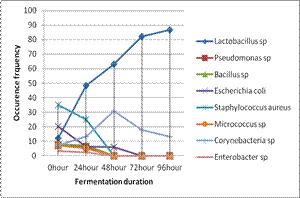
Figure 1: Occurrence
frequency of the bacteria isolates
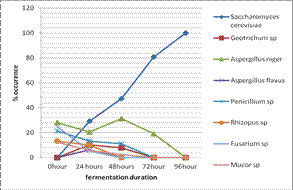
Figure 2:
Occurrence frequency of the yeasts/mould isolates
Table 1: Microbial isolates of maize fermentation water for ogi
production
|
Microbes |
|
Hours |
||||
|
0 |
24 |
48 |
72 |
96 |
||
|
Bacteria |
Lactobacillus
sp |
+ |
+ |
+ |
+ |
+ |
|
Pseudomonas sp |
+ |
+ |
- |
- |
- |
|
|
Bacillus sp |
+ |
+ |
- |
- |
- |
|
|
Escherichia coli |
+ |
+ |
+ |
- |
- |
|
|
Staphylococcus
aureus |
+ |
+ |
- |
- |
- |
|
|
Micrococcus
sp |
+ |
+ |
- |
- |
- |
|
|
Corynebacteria sp |
- |
- |
+ |
+ |
+ |
|
|
Enterobacter sp |
+ |
+ |
- |
- |
- |
|
|
Yeast and
mould |
Saccharomyces
cerevisiae |
- |
+ |
+ |
+ |
+ |
|
Geotrichum sp |
- |
+ |
+ |
- |
- |
|
|
Aspergillus niger |
+ |
+ |
+ |
+ |
- |
|
|
Aspergillus flavus |
- |
+ |
- |
- |
- |
|
|
Penicillium sp |
+ |
+ |
+ |
- |
- |
|
|
Rhizopus sp |
+ |
+ |
- |
- |
- |
|
|
Fusarium
sp |
+ |
+ |
- |
- |
- |
|
|
Mucor sp |
+ |
+ |
+ |
- |
- |
|
Note: Some microbes only occurred in one
set of the triplicate samples; + = Present;
- = Absent
The occurrence
of some microbes from day 24hours of fermentation in this study could be attributed
to changes in the acidity of the fermentation medium. For instance, authors
have variously reported that pH of fermentation of maize products increases
decreases as fermentation period increased [2, 35 -38]. For instance, as pH
decreases it encourage the growth of microbes such as Lactobacillus, Corynebacteria species and Saccharomyces cerevisiae at 72 to 96 hours. This suggested
that these are the main microbial isolates that play significant role in
fermentation of maize medium. This microbes typically aid in acid
fermentation. Generally, the various group of microorganisms isolated in this
study have been reported by Nwokoro and Chukwu [21], Akinleye et al. [22],
Wakil and Daodu [15], Omemu [24], Oyedeji et al. [25], Adegbehingbe [2],
Ijabadeniyi [18].
Specifically, the occurrence of microbes such as Pseudomonas aeruginosa and Aspergillus niger could be due to laboratory contamination. In
a study by Akinrotoye [39] and Kigigha et al. [40] on palm wine, the authors
have variously reported that microorganisms such as Pseudomonas
aeruginosa and Proteus vulgaris, Aspergillus niger in palm wine was probably due to unhygienic
mode of handling and or laboratory contamination. Also, Oyelana and
Coker [41] have reported that Aspergillus flavus, Aspergillus niger,
Penicillin oxalicum, Fusarium oxysprium and Rhizopus stolonifer were
frequently found in water used in the fermentation of ogi production. The
occurrence of Staphylococcus aureus in the medium could be due to
contamination. Typically, Staphylococcus aureus is a normal flora on the
skin of humans, which could have been possible source of their presence in the
maize fermentation sample. Escherichia
coli, Staphylococcus aureus, Pseudomonas, Bacillus, Micrococcus, Enterobacter, Penicillium, Rhizopus, Fusarium, Mucor species and Aspergillus niger found
in the maize medium in 0 hours suggesting that the maize could be contaminated
by them through handling and marketing processes prior to laboratory analysis.
4 Conclusion
Maize is an important cereal cultivated in several parts of the world.
Maize is important in the compounding of a number of foods especially infant
winning foods such as Ogi. In Nigeria, ogi (a cereal porridge) is produced from
maize and to a lesser extent from sorghum and millet). Ogi production is a
typical cereal fermentation process. This study characterized the diversity of
microbes found in fermentation medium between 0 – 96 hours. The study showed
that Saccharamyces cerevisiae, Corynebacteria and Lactobacillus species were the predominant isolates which during
the 96 hours of fermentation in the medium. The study also indicated the
presence of several aerobic microbes in the fermentation medium which were
probably introduced as contaminants prior to purchasing.
References
1.
Abdulrahaman, A. A. and Kolawole, O. M. (2006). Traditional Preparations
and Uses of Maize in Nigeria. Ethnobotanical
Leaflets, 10: 219-227.
2.
Adegbehingbe, K.T. (2013). Fermented sprouted and
unsprouted maize for ogi production. International
Journal of Advanced Research, 1(10): 428-434.
3.
Abioye, V.F. and Aka, M.O. (2015). Proximate Composition and Sensory Properties of Moringa Fortified
Maize-Ogi. Journal of
Nutrition and Food Sciences, S12
http://dx.doi.org/10.4172/2155-9600.S12-001.
4.
Bolaji, O.T.,
Oyewo A.O. and Adepoju, P.A. (2014). Soaking and Drying Effect on the
Functional Properties of Ogi Produce
from Some Selected Maize Varieties. American Journal of Food Science and
Technology, 2(5): 150-157.
5.
Wakil, S.M. and
Kazeem, M.O. (2012). Quality assessment
of weaning food produced from fermented cereal-legume blends using starters. International Food Research Journal,
19(4): 1679-1685.
6.
Sanni, A.I. and Adesulu, A.T. (2013). Microbiological and physico-chemical changes during fermentation of maize
for masa production. African
Journal of Microbiology Research, 7(34): 4355-4362.
7.
Oranusi, S. and
Dahunsi, S.O. (2015). Preliminary study on hazards and critical control points
of kokoro, a Nigerian indigenous fermented maize snack. SpringerPlus, 4:253. DOI
10.1186/s40064-015-1026-3.
8.
Onaolapo, I.O.
and Busari, T. (2014). The Effect of
Pasteurization on Microbial Growth and Sensory Qualities of Sekete – a
fermented maize beverage. IOSR Journal of Environmental Science,
Toxicology and Food Technology, 8(6):
51-54.
9.
Akobundu,
E.N.T. and Hoskins, F. H. (1982). Protein Losses in Traditional agidi Paste.
Journal of Food Science, 47(5): 1728-1729.
10. Umoh,
V. and Fields, M. J. (1981). Fermentation of Corn for Nigerian Agidi. Journal of Food Science, 46(3):
903-905.
11.
Ogiehor, I.S., Ekundayo, A.O. and Okwu,
G.I. (2005). Shelf stability of agidi
produced from maize (Zea mays) and the effects of sodium benzoate
treatment in combination with low temperature storage. African Journal of Biotechnology, 4 (7):
738-743.
12. Izah, S.C., Kigigha, L.T. and Okowa, I.F. (2016). Microbial quality
assessment of fermented maize Ogi (a cereal product) and options for
overcoming constraints in production. Biotechnological
Research, 2(2): 81-93.
13.
Organic facts (2016). Health benefits of
corn.
https://www.organicfacts.net/health-benefits/cereal/health-benefits-of-corn.html.
accessed June 1, 2016
14.
Farinde, E.O. (2015).
Chemical and sensory properties of sieved and unsieved fortified ‘ogi’. Nat Sci.,
13(1):49-53.
15. Wakil, S.M. and Daodu, A.A.
(2011). Physiological Properties of a Microbial Community in Spontaneous
Fermentation of Maize (Zea mays) for Ogi
Production. International Research
Journal of Microbiology, 2(3): 109-115.
16.
Iwuoha, C.I. and Eke, O.S. (1996). Nigerian indigenous fermented
foods: their traditional process operation, inherent problems, improvements and
current status. Food Research
International, 29(5-6): 527 – 540.
17. Adebukunola, M., Omemu, A. M. and
Mobolaji, O.B. (2015). Consumer’s Knowledge, Attitude, Usage and Storage
Pattern of Ogi – A Fermented Cereal Gruel in South West, Nigeria. Food and Public Health,
5(3): 77-83.
18.
Ijabadeniyi, A.O. (2007): Microorganisms associated with ogi traditionally produced from three
varieties of maize. Research Journal of Microbiology, 2(3): 247-253.
19.
Badmos, A.H.A., Kayode, R.M.O., Amali, H. E., Ahmed, O. Adeyemi,
K.O. (2014). Fermentation and West African food culture. Global Journal of Bio-Science and Biotechnology, 3(2): 128-132.
20.
Bolaji, O.T., Adepoju, P.A. and Olalusi,
A.P. (2015). Economic implication of industrialization of a popular weaning
food “ogi” production in Nigeria: A
review. African Journal of Food Science,
9(10): 495-503.
21.
Nwokoro, O. and Chukwu, B.C. (2012). Studies on Akamu, a
traditional fermented maize food. Revista
Chilena de Nutrición, 39 (4):180-184.
22.
Akinleye, O.M., Fajolu, I.O., Fasure, A.K., Osanyinpeju, O.S.,
Aboderin, A.O. and Salami, O.O. (2014). Evaluation of microorganisms at
different stages of production of Ogi
in Alimosho Community, Area Southwest, Lagos, Nigeria. American Journal of Research Communication, 2(10): 215-230.
23.
Oyewole, O.A. and Isah, P. (2012). Locally Fermented Foods in Nigeria and their Significance to National
Economy: a Review. Journal of Recent Advances in Agriculture,
1(4): 92-102.
24.
Omemu, A.M. (2011). Fermentation
dynamics during production of ogi, a Nigerian fermented cereal porridge.
Report and Opinion, 3(4):8-17.
25. Oyedeji, O., Ogunbanwo, S.T. and Onilude,
A.A. (2013). Predominant Lactic Acid
Bacteria Involved in the Traditional Fermentation of Fufu and Ogi,
Two Nigerian Fermented Food Products. Food and Nutrition Sciences, 4:
40-46.
26.
Cheesbrough, M. (2004). District
Laboratory Practice in Tropical Countries. Low price Edition part 2.
Cambridge press, England.
27.
Benson H.J (2002) Microbiological
Applications: Laboratory Manual in General Microbiology. complete version,
5th edition. McGaraw-Hill, New York.
28.
Holt, J.G., Kneg, N.R., Sneath, P.H.A., Stanley, J.T. and Williams,
S.T. (1994). Bergey’s Manual of
Determinative Bacteriology. William and Wilkins Publisher, Maryland. New
York.
29.
Pepper, I.L. and Gerba, C.P. (2005). Environmental microbiology. A
laboratory manual. Second edition. Elsevier academic press.
30.
Oyarekua, M.A. (2011). Evaluation
of the nutritional and microbiological status of co-fermented cereals/cowpea
‘OGI’. Agriculture and Biology Journal of North America, 2(1): 61-73.
31.
Ellis, D., Davis, S., Alexiou, H.,
Handke, R., Bartley, R. (2007). Descriptions of Medical Fungi. Second
Edition. Printed in Adelaide by Nexus Print Solutions, Underdale, South
Australia.
32.
Nwachukwu, I.N., Ibekwe, V.I., Nwabueze, R.N. and Anyanwu, B.N
(2006b). Characterization of palm wine yeast isolates for industrial
utilization. African Journal of Biotechnology 5 (19) 1725 – 1728.
33.
Barnett, J., Payne, R. and Yarrow, D. (1990). Yeasts:
Characteristics and Identification, 2nd ed. Cambridge University Press.
34.
Kregger Van-Rij (1987) The Yeasts: A Taxonomic study (3rd Ed.)
Elsevier Science Oub. Co. Netherlands.
35.
Adegbehingbe, K.T. (2014a). Production of Masa Using
Maize-Sorghum Blends. International Journal of Science and
Research, 3(8) :
484 – 489.
36. Adegbehingbe, K.T. (2014b). Microbiological
analyses and nutrient composition of sorghum co-fermented with Lima bean seeds.
Current Research in Microbiology and
Biotechnology, 2(4): 431-437.
37.
Annan, T., Obodai, M., Anyebuno, G.,
Tano-Debrah, K. and Amoa-Awua, W.K. (2015). Characterization of the dominant
microorganisms responsible for the fermentation of dehulled maize grains into nsiho
in Ghana. African Journal of Biotechnology,
14(19):1640-1648.
38.
Abdus-Salaam, R.B., Adepoju, P.A.,
Olaleye, O.N. and Adeoye, I.A. (2014). Studies on the antimicrobial effect of
corn steep liquor on some diarrhoea causing organisms. African Journal of
Biotechnology, 13(2): 332-335
39.
Akinrotoye, K.P. (2014). Effects of fermented palm wine on some
diarrheagenic bacteria. Elite Research
Journal of Biotechnology and Microbiology, 2 (1): 4 – 14.
40.
Kigigha, L.T., Izah, S.C. and Okitah, L.B. (2016). Antibacterial
activity of palm wine against Pseudomonas, Bacillus, Staphylococcus,
Escherichia, and Proteus spp. Point Journal of Botany and Microbiology
Research, 2(1):046-052.
41.
Oyelana, O.A. and Coker, A.A. (2012). Microbial contamination at
different stages of production of ogi in Mowe: a rural community, Southwester
Nigeria. Bacteriology Journal, 2(1): 1 -11.